Perth Hidden Defects: Room-by-Room Buyer Checklist Before Inspection
Buying a home in Perth is exciting, but many buyers worry about hidden problems that only show up after settlement. With our hot, dry conditions and sudden spring storms, small issues with water, movement, or roofing can quickly turn into costly repairs.
A professional property inspection in Perth is still the safest way to understand a home's true condition before you buy. However, a simple room-by-room check at home opens helps you spot early red flags, shortlist better properties, and ask smarter questions. This checklist is not a replacement for a report from ABBC Building Inspectors, but it will guide you through a practical walk-through, including outdoor areas that are easy to ignore when gardens are green and tidy. Different property types can hide different risks, and strata buildings bring in common property and shared maintenance, so we will touch on those as we go.
Start Outside: Site, Roof and Structure Clues
Before you fall in love with the kitchen, step back and look at the block and structure. Perth soils, drainage, and sun can be tough on buildings.
Start with the site and drainage. After rain, look for water pooling or soggy patches, especially near the footings, and check that ground levels fall away from the house rather than toward it. Follow downpipes to see where they discharge and note any makeshift extensions, then watch for stained walls or washed-out garden beds below roof edges. Retaining walls can also reveal early movement issues, so note any that are cracked, leaning, or bowing.
Then scan the roofline and exterior walls. Stand across the street and look for a sagging roofline or dips in the ridge, and check for loose or missing tiles, rust spots on metal sheeting, or odd patchwork repairs. As you walk the exterior, look over brickwork and render for stepped or widening cracks, especially near corners, and pay attention to damp patches or bubbling paint, which are often found under windows. Also look at eaves and fascias for rot, peeling paint, or water staining.
Do not forget paving, garages, and outbuildings. Walk over the paving and feel for uneven, lifting, or rocking pavers, especially around pools and alfresco areas. In garages, look for cracking near garage door corners or rust stains from steel lintels, and check for water marks on the garage slab that hint at past flooding. For older sheds or extra structures, note rusted framing, damaged cladding, or rough DIY changes.
Living Areas: Floors, Walls and Windows Under Scrutiny
Inside, many signs of movement and moisture are easy to see if you slow down and look closely.
Start with floors and movement by walking slowly and feeling for springy, sloping, or bouncy areas. Listen for creaks that repeat in the same spots, and tap tiles lightly with your knuckles to pick up hollow or drummy sounds. In split-level homes, pay extra attention to transitions where cracks and trip hazards often form.
Then check walls, ceilings, and finishes. Look for cracks running from the corners of doors and windows, and note long horizontal cracks or gaps that keep reappearing along cornices. Scan ceilings for yellow or brown stains, sagging, or obvious patch jobs, and watch for wavy walls, rough plastering, and repeated small patches.
Test windows, doors, and ventilation with a few simple actions:
- Open and close internal and external doors, feeling for sticking or scraping
- Check window frames for soft timber, flaking paint, or swelling
- Look at the edges of double glazing for condensation trapped between panes
- Pay attention to musty smells or visible condensation on glass
Kitchen, Bathrooms and Laundry: Water Damage Hotspots
Wet areas are common sources of hidden damage, especially after years of small leaks.
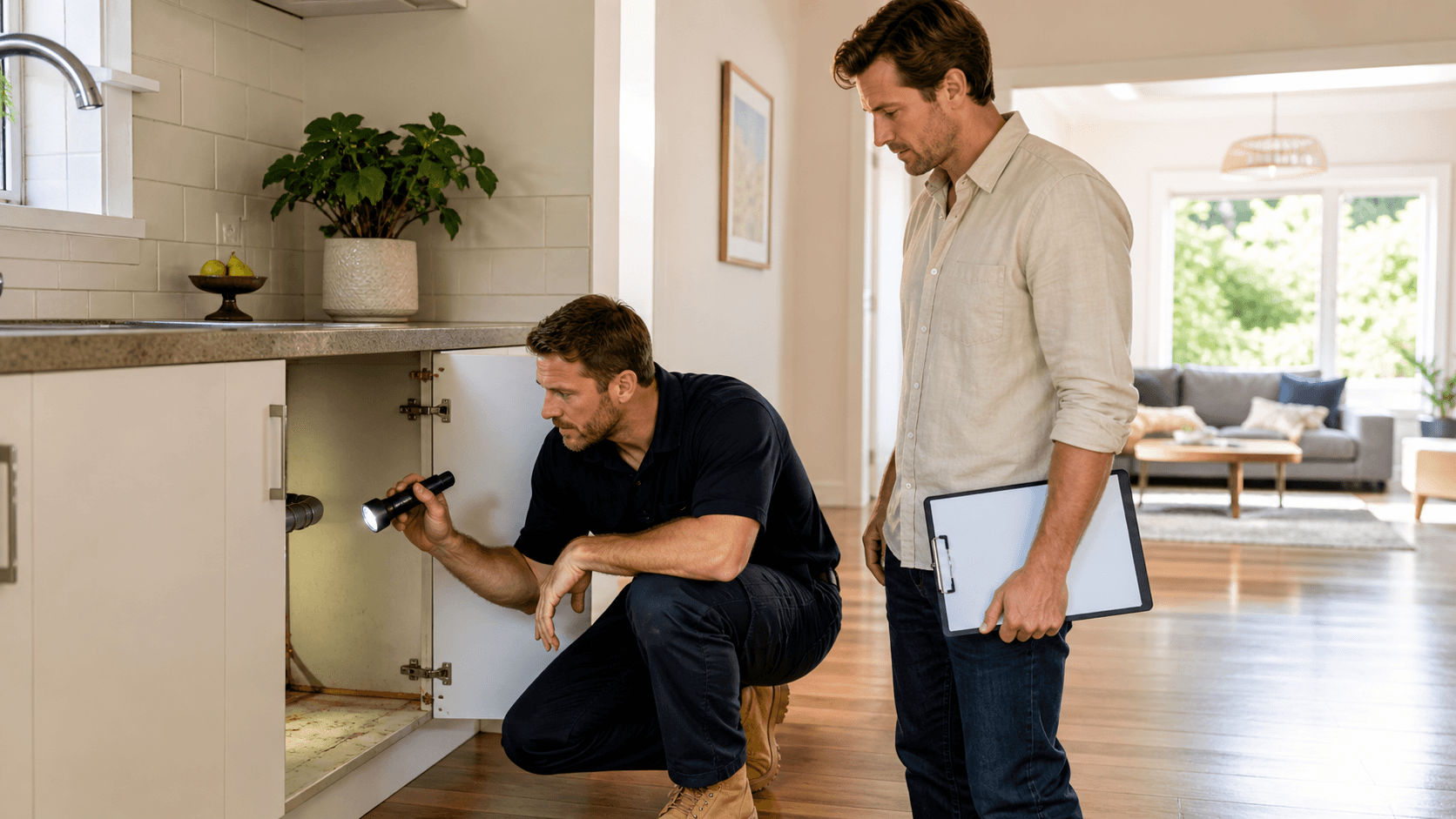
Under-sink and wet area checks are worth doing thoroughly. Open every cupboard under sinks and basins, even in powder rooms, and look for swollen boards, bubbling laminates, and dark stains. Smell for musty odours that stay even when doors are open, then turn taps on and watch for drips at joints and fittings. Finally, check silicone and grout lines for gaps, mould, or crumbling.
Showers, tiles, and drainage need extra attention because failures can be costly and slow to show up. In showers, note cracked tiles, loose tiles, or a spongy feel underfoot, and watch how water runs when the shower is on, does it head to the floor waste? Look at skirting boards and adjacent walls for swelling or staining, and open wardrobes that share a bathroom wall to check backs and corners.
Then look at appliances, laundry, and ventilation:
- Check around dishwashers, fridges with water lines, and washing machines for rust or staining
- Look at the floor under appliances where possible
- Make sure bathrooms and laundries have exhaust fans, not just a window
- Turn fans on if allowed and listen for very noisy or very weak operation
- Inspect fan covers and nearby ceilings for mould or heavy dust build-up
Bedrooms, Roof Space and Hidden Storage Risks
Bedrooms often hide clues behind furniture and inside wardrobes.
In bedrooms and wardrobes, make a point of opening things fully and checking areas people often miss. Slide or swing wardrobe doors fully open, not just halfway, and look behind tall furniture for cracks, stains, or mould patches. Smell inside built-ins on external walls for damp or musty odours, especially those backing onto showers, and check carpet edges near balconies or doors for dampness or rusted trims.
The roof space holds important clues, but it is not an area for untrained buyers to enter. Instead, keep it to safe, observational steps:
- Ask if roof access is permitted during the viewing
- From the manhole, without climbing in, look for missing insulation or sagging ceiling sheets
- Note any obvious DIY wiring or loose cables
- Outside, watch for birds, possums, or other pests entering at eaves or broken tiles
Storage areas, balconies, and extras deserve a careful look as well:
- Open linen cupboards and under-stair storage and check corners for staining
- Feel for dampness on walls or ceilings below upstairs bathrooms
- On balconies, look for ponding water, cracked tiles, or soft decking boards
- Test handrails gently for looseness and scan for rust at fixings
- In strata properties, have a quick look at common stairwells, lifts, and walkways for cracking, leaks, or rust
When Your Checklist Says It's Time to Call the Experts
This checklist is designed to help you spot early warning signs, not to replace a full property inspection in Perth. If you are seeing several issues, such as:
- Extensive cracking inside and out
- Widespread damp or mould
- Roof concerns or evidence of leaks
- Suspected termite damage or decay
then it is time to step back and bring in independent experts before moving forward. Many serious problems are hidden inside walls, under floors, or within roof spaces and need specialised tools and experience to identify properly. For units and townhouses, a separate strata inspection is also important to understand existing building issues and likely future maintenance that could affect levies.
At ABBC Building Inspectors, we focus on giving buyers a clear, practical view of a property's condition. Our pre-purchase and defects inspections highlight repair priorities and help you understand where you may want to negotiate or plan for future works. Because we work across Perth, we are familiar with local construction styles, soil conditions, and how changing moisture levels can affect different areas and building types. We also work with builders through our Next Level Inspections, which are aimed at helping them improve technical knowledge and build quality on site, so the homes buyers see are better from the start.
Use this checklist at your next home open and keep simple notes and photos as you go. When you are serious about a property and your walk-through has raised questions, that is the right time to follow up with a professional inspection and get the detailed information you need to move ahead with confidence.
Protect Your Investment With a Thorough Building Inspection
If you are planning to buy a home or investment property, ABBC Building Inspectors can give you clear, independent advice before you commit. Book a comprehensive property inspection in Perth so you understand the real condition of the building and any potential issues. We explain our findings in plain language and are available to answer your questions. To discuss your situation or arrange an inspection, simply contact us.