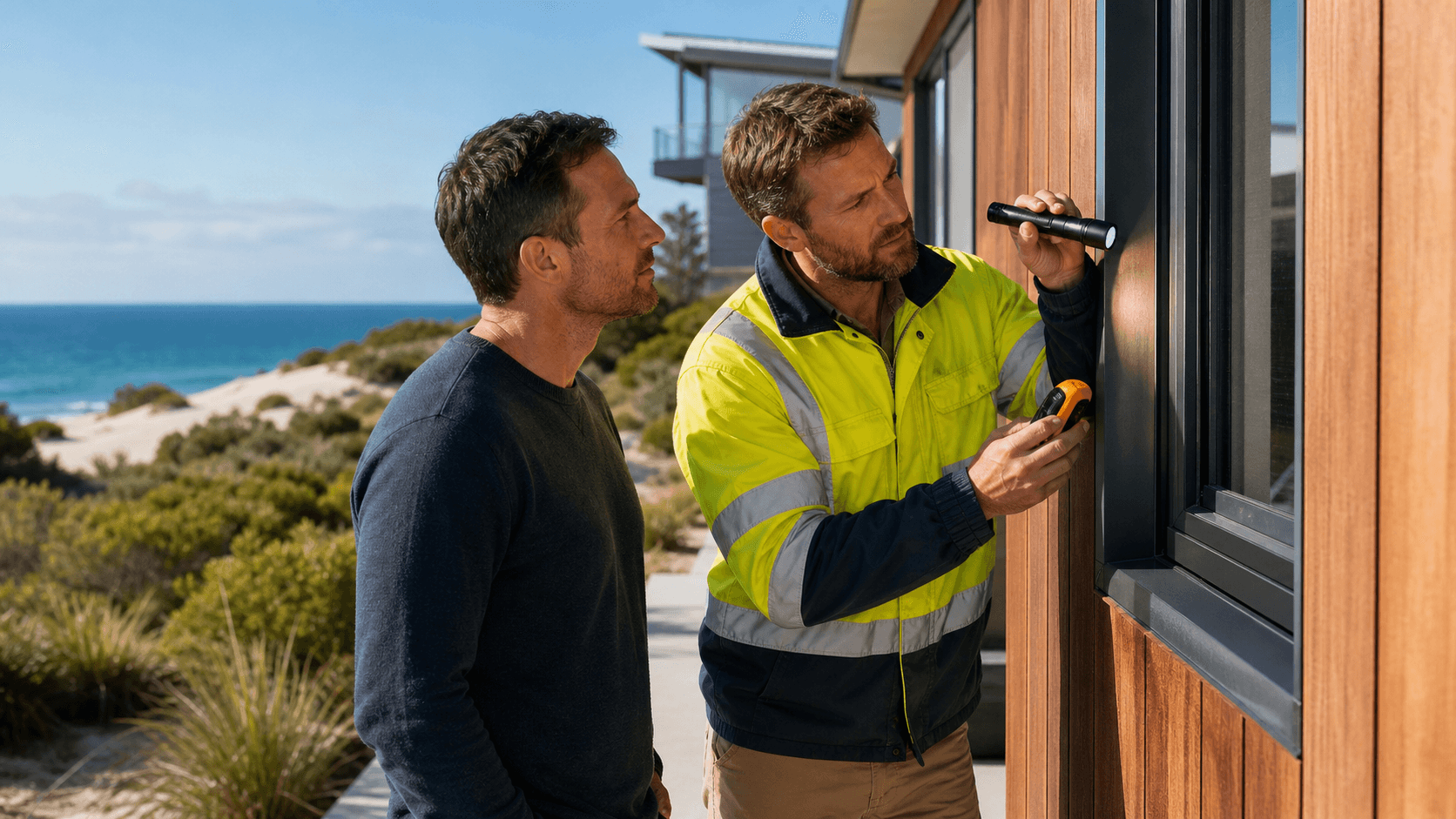
Why Building Inspector Dunsborough Expertise Matters for Coastal Homes
Buying or owning a home near the beach around Dunsborough is a big investment. The views, the sea air and the relaxed lifestyle are all part of the appeal, but coastal conditions are hard on buildings and small problems can turn into expensive repairs if no one is keeping an eye on them.
Homes near the coast face salt in the air, strong winds, heavy rain and higher moisture levels. These all speed up wear and tear. A building inspector in Dunsborough who understands local conditions can spot the warning signs early and help you make clear decisions about buying, selling or maintaining a home. Spring and early summer are often a smart time to arrange inspections, before holiday crowds, summer storms and peak trade demand kick in.
How Coastal Conditions Attack Dunsborough Homes
Life by the ocean is great for people, not so great for buildings. Coastal weather works away at materials every day, even when the sky is blue and the wind feels gentle.
Salt in the air is one of the biggest issues. It settles on exposed metal and starts corrosion, especially when there is a regular sea breeze and overnight moisture. We commonly see early damage to:
- Roof sheets, screws and flashings
- Balustrades and handrails on balconies and decks
- Metal light fittings, latches and external hardware
- Steel framing components, brackets and ties near openings
Sun, wind and sand also punish the outside of the home. Wind-driven rain can be forced under flashings or behind cladding. Strong afternoon sun breaks down paint and sealants faster than inland areas. On homes close to the shoreline or on exposed ridgelines, windows and doors often show:
- Perished seals and gaskets
- Stiff or corroded hinges and rollers
- Gaps around frames that let in water and drafts
Timber is another weak point near the ocean. Decking, stairs and balcony framing can rot where water sits or ventilation is poor. If waterproofing or drainage is not right, moisture can get into:
- Balcony edges and junctions with walls
- Subfloor areas with blocked vents
- Timber posts set into concrete or soil
An experienced building inspector in Dunsborough knows where these problems tend to show up first in local construction styles, from coastal cottages to newer estates, and can focus attention on the highest risk areas.
Why Local Inspection Expertise Matters in Dunsborough
Not all homes are built the same, and not all locations behave the same. Local knowledge counts when you are assessing a coastal property.
Soil conditions around Dunsborough can change over short distances. There are sandy sites, clay pockets, sloping blocks and areas with limestone retaining. Each type has different movement risks, drainage needs and footing details. A local inspector understands how these site factors should have been managed and what early warning signs to look for.
Coastal exposure classifications and local building rules also affect:
- The grade and coating of metal fixings and roofing
- The type and thickness of external cladding systems
- The detailing of flashings, membranes and control joints
- Energy efficiency measures, such as glazing and insulation
When someone inspects homes in the region day in and day out, they start to see patterns. Certain builders tend to use particular roof designs or cladding systems. Some estates repeat the same balcony details or retaining approaches. That pattern knowledge allows a focused inspection, so we can quickly separate normal wear in a salty environment from defects that need prompt attention.
At ABBC Building Inspectors, we work across Perth and the South West, including Dunsborough. That broader experience helps us tell the difference between light coastal ageing that just needs monitoring and serious issues that could affect safety or long-term performance.
Key Pre-Purchase and Maintenance Checks for Coastal Homes
When you are buying near the ocean, a standard building check is not enough. The inspection should be tuned to coastal risks and local building habits.
For pre-purchase inspections in Dunsborough, key areas include:
- Roof coverings, flashings and fixings for early corrosion or poor detailing
- Gutters and downpipes for blockages, leaks and correct falls
- Balconies and decks for rot, movement, ponding and balustrade safety
- External cladding and render for cracking, gaps and failed sealants
- Floor slab areas for moisture
- Termite management systems and any signs of timber pest activity
Many buyers focus on the look of a home and miss subtle warning signs, such as:
- Corroded metal fixings hidden behind fresh paint
- Waterproof membranes at balcony doors starting to fail
- Hairline cracking in render that can let in wind-driven rain
- Poor surface drainage that can lead to slab movement over time
For existing owners, regular maintenance inspections are just as important as the pre-purchase check. Having a property assessed before and after winter can pick up early corrosion, new cracking, joint movement or water staining before it turns into structural damage. A clear, independent report helps owners plan maintenance, set priorities and avoid surprises when the time comes to sell or rent out the property.
Extra Coastal Care for Strata and Holiday Homes
Strata and short-stay properties around Dunsborough face some extra challenges. A lot of people use them, but no one person is always watching the building closely.
Strata inspections deal with completed apartment or townhouse complexes. They focus on the shared parts of the building and site, such as:
- Roof coverings, gutters and downpipes
- Common balconies, access ways and balustrades
- External coatings, render and cladding
- Concrete areas for cracking or spalling
- Shared services and drainage issues
These inspections are not about checking work during construction. They are about finding issues after construction is finished and helping strata managers and owners plan medium- and long-term maintenance.
Holiday and short-stay homes bring a different mix of risks. There can be high turnover of guests, heavier use of fittings and finishes, and then long quiet gaps where a slow leak or small defect can quietly get worse. Regular independent inspections can give owners and managers a clear picture of condition, reduce disputes with guests and neighbours, and support good asset planning.
How Next Level Inspections Help Builders in Coastal Areas
Builders working around Dunsborough understand that coastal conditions are tough on materials. Next Level Inspections are aimed at supporting those builders who want to lift technical knowledge and quality on site, not at owners.
On coastal projects, we help builders fine-tune key details, such as:
- Choosing and installing the right fixings for marine or near-marine exposure
- Improving balcony falls, drainage and membrane setups
- Checking that flashings are correctly lapped, sealed and supported
- Selecting cladding, coatings and sealants suited to high exposure zones
Practical, site-based feedback that lines up with the National Construction Code and local conditions can reduce callback issues and build stronger reputations. Homes that are detailed with coastal risks in mind usually stand up better over time, which is good for builders and their clients.
Local expertise, careful inspection and clear reporting all work together to protect coastal homes around Dunsborough, whether they are family houses, strata complexes or holiday properties.
Get Started With Your Project Today
If you are planning a build or renovation in Dunsborough, we can help you move forward with confidence. Book a visit from a qualified building inspector in Dunsborough so potential issues are identified early and clearly explained. At ABBC Building Inspectors, we provide practical, straightforward reports that support better decisions and smoother projects. If you have questions before booking, feel free to contact us.