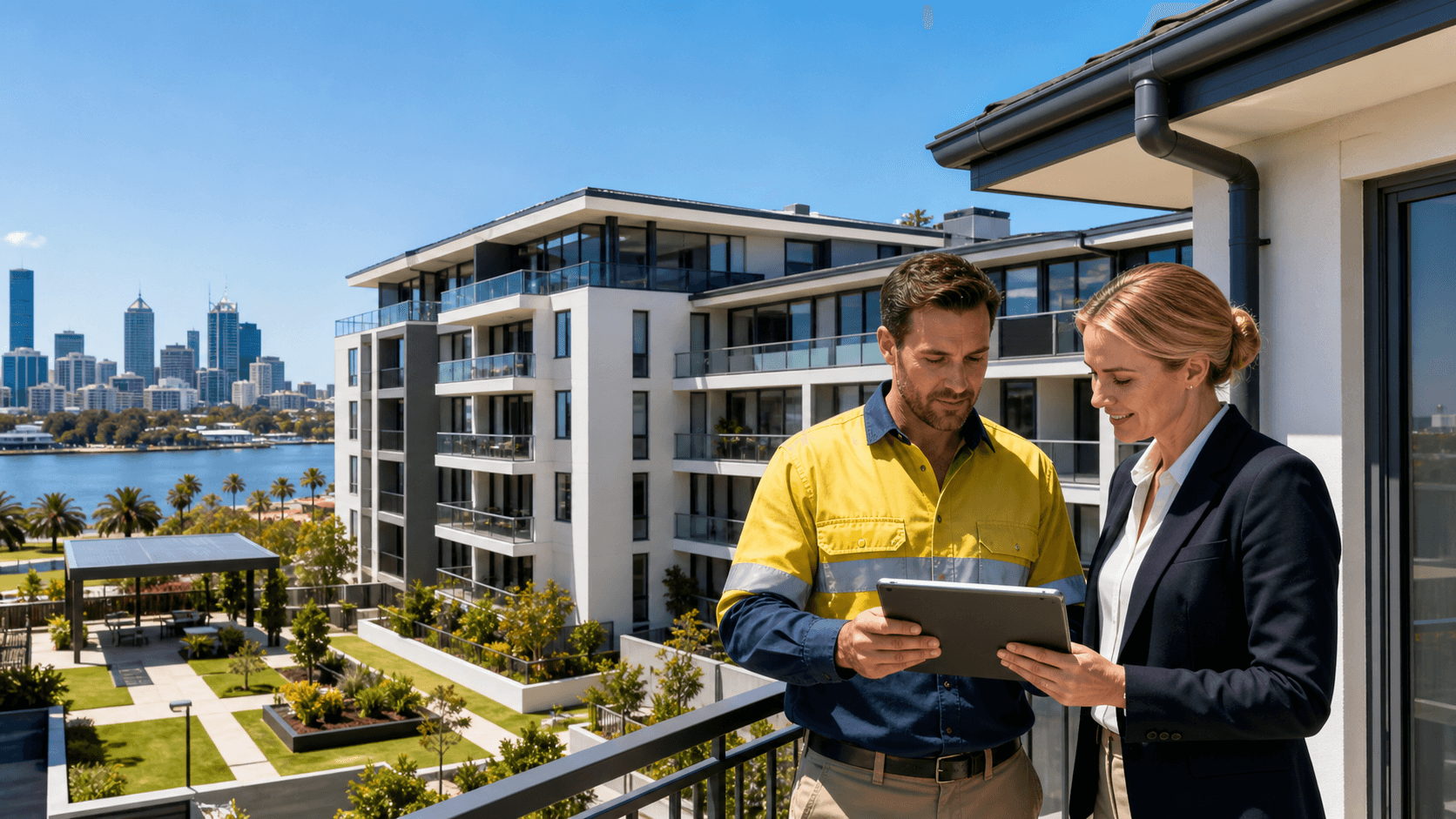
Smarter Strata Decisions for Aging Perth Buildings
Strata buildings in Perth that went up in the 80s, 90s and early 2000s are now hitting the age where lots of big-ticket items start failing at once. Roofs leak, facades crack, services play up and common areas start to look tired. When this happens without a plan, owners can feel like they are always in crisis mode.
Reactive, fix-it-when-it-breaks maintenance usually means emergency works, pressure for special levies and tension between owners, tenants and strata councils. Arguments flare over what gets fixed first and who should pay. It is stressful and often more expensive in the long run.
A smarter way is to combine detailed condition audits with forecasted capital expenditure planning. That means understanding the real state of the building now, then mapping out what needs to happen over the next 10 to 15 years in a clear order. It helps committees prioritise safety, protect value and spread costs more smoothly.
We will walk through how this works using a realistic Perth coastal block case study, then show a simple prioritisation matrix you can adapt for your own strata maintenance plans.
Why Strata Maintenance Plans Matter More After 15 Years
A formal strata maintenance plan is a long-term roadmap for the building. It usually includes:
- A summary of the current condition of major elements
- Recommended repairs and renewals
- Suggested timeframes over the life of the building
- Budget forecasts for each stage of work
Once a building tips past about 15 years of age, issues often start to accelerate. You can see:
- Concrete spalling where steel reinforcement starts rusting
- Roof membranes reaching the end of their life and leaking
- Rusting balcony balustrades, especially in coastal areas
- Ageing lifts, pumps and other services needing upgrades
- Fire systems that no longer meet current expectations
Our focus at ABBC Building Inspectors is on completed buildings, not those under construction. We come in once the project is long finished, to assess how the building is really performing in day-to-day use. Our work is about condition, risk and planning, not ticking boxes for builders during the build.
Perth's climate also plays a big part. Heavy winter rain exposes every weakness in waterproofing and drainage. Long, hot summers put extra stress on facades and services. Planning works around seasons, like doing roof and facade projects in drier periods, can cut risk and disruption.
Step by Step Condition Audits for Existing Strata
A condition audit is simply a systematic check of all common property items in a completed strata building. We look from the roof to the basement so the committee has a clear, shared picture of what is going on.
For a typical Perth complex, the scope usually covers:
- External walls, windows and facades
- Roof coverings, gutters and downpipes
- Balconies, balustrades and external stairs
- Car parks, driveways and site drainage
- Structural elements we can see
- Services such as lifts, pumps and fire systems
- Internal common areas like lobbies, corridors and plant rooms
Our registered builders inspect on site and document each issue. For every item we record things like:
- Photos and location details
- Severity ratings, from minor to serious
- Likely cause of the problem
- Recommended next steps for rectification
We then group findings into building systems, for example roof, facade, structure, services and interiors. For each system we estimate the remaining useful life. This is what shifts a report from being just a defect list into the base for forecasting future capital works.
Turning Audit Findings Into Forecasted Capital Expenditure
Once the inspection is complete, the next step is turning raw data into a practical long-term strata maintenance plan and Capital Expenditure forecast. We take the grouped items and:
- Decide if they need repair, partial upgrade or full renewal
- Estimate realistic cost ranges using current Perth market conditions
- Allow for access issues, such as scaffolding or lifts
- Include contingencies for hidden damage, like under tiles or behind render
- Spread the works over n itemised lifetime horizon
Cost ranges are not exact quotes, but they give committees something solid to plan around. We also consider likely inflation and the way related works can be bundled to make the most of access and preliminaries.
The big benefit is smoothing out contributions. Instead of surprise special levies, the committee can:
- Stage works so major items happen when the sinking fund is healthy
- Bring forward high risk items before damage spreads
- Push lower priority works back, knowing the risk is manageable
Because buildings and markets change, these plans are not set-and-forget documents. Reviewing and updating the plan every three to five years keeps it aligned with real conditions and completed works.
Case Study: a Perth Coastal Block Facing Major Repairs
Let us look at a fictionalised but realistic four-storey coastal block in Perth, built in the early 2000s. Recently the committee had been dealing with:
- Ongoing roof leaks each winter
- Rusting balcony balustrades, especially on the ocean side
- Concrete cracking in the car park ceiling
- Dated lobbies that were dragging down rental appeal
- Insurers asking more questions about building condition
Our condition audit found:
- A roof membrane near the end of its life, with patch repairs failing
- Early concrete spalling on exposed beams and soffits facing the ocean
- Non-compliant balcony balustrade fixings with visible corrosion
- Ageing fire systems nearing recommended replacement
- Cosmetic wear in lobbies and corridors that affected presentation, not safety
From there, we mapped a 10 year plan, with costings built in for the 10-20 year timeframe. The intention was clear. Owners wanted lobby upgrades, but there were serious safety and structural items that needed to come first. The plan laid out what needed to be done now, what could be staged over a few years and what could reasonably wait.
Sample Prioritisation Matrix for Strata Committees
To help the committee agree without arguments, we set up a simple prioritisation matrix. Instead of debating what looked worst, we ranked each item against clear criteria:
- Safety and compliance risk
- Impact on building structure and serviceability
- Probability of further damage or cost escalation if delayed
- Impact on amenity, liveability and asset values
- Ease of scheduling and access, including seasonal limits
- Funding readiness, based on the sinking fund versus likely levy needs
Using that, the case study building landed on:
- Roof membrane replacement
Very high safety and structural risk because of repeated leaks, high escalation risk, winter sensitive, so planned within 12 months in a dry window.
- Balustrade upgrades
High safety risk with visible corrosion and non-compliant fixings, staged over 2 to 3 years starting with the worst exposed elevations.
- Concrete repairs to soffits and beams
High structural importance, bundled with facade access in years 2 to 3 to make the most of scaffolding and engineering input.
- Fire system upgrades
Compliance driven, rated as non negotiable within 5 years but not as urgent as the roof and balustrades.
- Lobby and corridor refurbishments
Low safety risk but high amenity impact, scheduled after the critical works and partly lined up with natural vacancy periods to reduce disruption.
Working through this matrix in a workshop allowed the council and the strata manager to lock in a staged works program, along with a funding strategy that matched their strata maintenance plan. Everyone could see the logic on one page, which reduced conflict.
Getting Your Perth Strata Plan Audit-Ready This Year
The best time to get audit-ready is before the next big failure or dispute. Planning condition audits and design work ahead of major weather seasons gives more room to schedule projects sensibly and brief owners clearly before budgets are set.
For older Perth strata buildings, shifting from reactive patch jobs to structured strata maintenance plans built on independent condition audits makes life easier for committees and owners. It supports safety, protects long-term value and gives your sinking fund a clear purpose.
Protect Your Strata's Long-Term Value With A Clear Maintenance Plan
If your strata is ready to take a more proactive approach, we can help you create practical, compliant strata maintenance plans tailored to your building's needs. At ABBC Building Inspectors, we focus on clear reporting and realistic timeframes so your committee can budget with confidence. Talk with our team about your building's condition and future priorities, or contact us to book an inspection and get your plan underway.